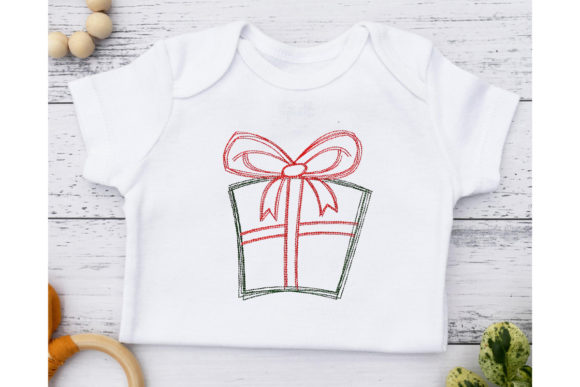
Reviewing the Present Embroidery Design for Holiday Projects
As a designer who spends more time staring at stitch maps than actual fabric, I have learned that not every machine embroidery design is created equal. Some look fantastic on a screen but turn into a tangled mess of thread breaks and puckering on the hoop. Others are simple, reliable workhorses that elevate a product without demanding hours of troubleshooting. When I first loaded the Present sketch embroidery design into my software, I was looking for that sweet spot: a balance of charm and technical reliability. This design, with its clean lines and festive theme, immediately struck me as a versatile asset for anyone running a craft business or creating personalized gifts.
First Impressions and Visual Personality
The Present design carries a distinct mood. It is not overly ornate or cluttered, which is often where holiday designs fail. Instead, it relies on a sketch-like aesthetic that feels hand-drawn and organic. This visual personality is crucial because it bridges the gap between digital precision and handmade warmth. For an Etsy seller or a boutique owner, this means the final product feels approachable and artisanal rather than mass-produced. The layout is compact, making it ideal for areas where space is limited but impact is necessary. Whether you are aiming for subtle branding on a cuff or a focal point on a tote, the design’s simplicity allows it to breathe.
In terms of theme, it is explicitly tied to celebration. While it is categorized under Christmas, the concept of a gift box is universal enough to extend to birthdays and other milestones. This versatility increases the lifespan of the embroidery file in your library. You are not limited to December sales; you can market it year-round as part of a broader "gift" collection.
Real-World Application: The Tote Bag Test
To truly evaluate a design, you must imagine it on a physical product. I recently considered using Present for a line of canvas tote bags intended for holiday shoppers. Canvas is a forgiving fabric, but it has a coarse fabric texture that can swallow fine details. I simulated the stitching process mentally, considering how the satin stitch borders would interact with the weave. Because the design uses a sketch style, it likely employs a mix of running stitch and lighter fill areas rather than dense, heavy blocks of thread. This is a significant advantage for tote bags, as it prevents the fabric from distorting under the weight of the stitching.
If you are planning a similar project, consider the scale. On a large tote, the design might need to be enlarged to maintain visibility. However, enlarging a sketch-style design too much can reveal the individual stitch paths, breaking the illusion of a continuous line. I recommend testing different sizes on scrap fabric to find the threshold where the design remains crisp without becoming pixelated or jagged. For a small shop product, consistency is key, so once you find the perfect size, stick to it for your entire inventory.
Performance on Apparel and Accessories
Beyond home decor, Present shows great promise for custom apparel. Imagine this design embroidered on the left chest of a fleece sweatshirt or the brim of a baseball cap. For sweatshirt embroidery, the softness of the fabric pairs well with the gentle lines of the sketch. However, fleece requires careful attention to stabilizer choice. A cut-away stabilizer is usually best to support the stitches without adding unnecessary stiffness. Since the design is not overly dense, it should not create a hard, uncomfortable patch on the garment, which is a common complaint with cheaper digital embroidery files.
When applying this to caps, the curved surface presents a challenge. The design’s compact nature works in your favor here. Large, wide designs distort on curved hats, but a smaller, centralized motif like Present sits neatly on the front panel. Just ensure you are using a appropriate hoop and stabilizer combination to prevent shifting during the stitching process. For baby embroidery projects, such as onesies or bibs, the lack of dense fill stitches is a major benefit. Babies have sensitive skin, and heavy stitching can be irritating. This design offers the festive look of holiday embroidery without the bulk.
Technical Considerations and Pitfalls
While the design is robust, no embroidery project is without its technical nuances. One area to watch is the contrast. Sketch-style designs often rely on single-color threads to mimic a pencil or ink drawing. If you choose a thread color that is too close to the fabric color, the design will vanish. Always test your thread colors against your chosen material. A high-contrast combination, such as white thread on navy blue or red on cream, will yield the best results. If you are working with dark fabrics, ensure your machine tension is calibrated correctly to prevent the bobbin thread from showing through the lighter top stitches.
Another consideration is the hoop size. Although the design is small, you must ensure your hoop accommodates the entire motif with enough margin for the clamping mechanism. Do not attempt to stretch the fabric to fit a design that is slightly too large for your hoop; this leads to uneven stitching and poor registration. If you are unsure about the exact dimensions or stitch density of the Present file, check the metadata in your embroidery software before loading it onto the machine. Understanding the stitch count helps you estimate production time, which is vital for pricing your handmade product accurately.
Enhancing Product Value and Brand Consistency
From a business perspective, the quality of your design assets directly influences customer trust. A clean, well-digitized design like Present signals professionalism. When customers see consistent, crisp stitching on your finished product, they are more likely to return and recommend your shop. This design can serve as a signature element for your brand. For example, you could use it on packaging tags, thank-you cards, or as a subtle accent on every item you sell. This creates a cohesive brand identity that stands out in a crowded marketplace.
Furthermore, the versatility of the design allows for creative marketing. You can create printable mockups showing the design on various items—napkins, pillows, aprons—to showcase its adaptability. This helps customers visualize the product in their own homes, increasing the likelihood of a sale. For commercial embroidery clients, offering this design as an add-on for corporate holiday gifts can be a lucrative upsell. It is festive without being religious or exclusionary, making it safe for diverse corporate environments.
Final Designer Notes
Before committing to a large production run, always stitch out a test sample. Use the same fabric and stabilizer you intend to use for the final products. Inspect the small details closely. Are the corners sharp? Is the thread tension even? Does the design lay flat? These small checks can save you from costly mistakes. If you are new to using sketch-style designs, pay attention to how the machine handles the start and stop points. Some digitizers leave small tails that need trimming, while others use lock stitches to secure the ends. Knowing this beforehand helps you plan your finishing workflow.
Finally, always confirm the licensing terms of the embroidery file. Ensure that you have the right to use the design for commercial purposes if you plan to sell items featuring Present. Respecting intellectual property is fundamental to maintaining a reputable craft business. With proper preparation and attention to detail, this design can become a staple in your holiday collection, bringing joy to your customers and efficiency to your workflow.